Showing posts with label Dr. Melissa Macias. Show all posts

Tuesday, August 29, 2017

Traveling and volunteering with MEDICO


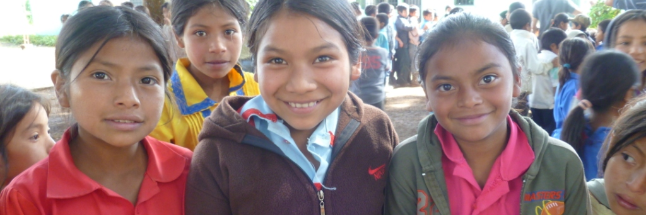
Melissa Macias earned her PhD from the Medical College of Wisconsin in Milwaukee, where she also went on to complete her residency. In her leisure time, Melissa Macias gives to a variety of charitable and philanthropic organizations. Previously, she traveled to Honduras as a medical student volunteer with MEDICO, seeking to improve the lives of those in Central America through comprehensive health care. 

Since 1990, MEDICO, a non-denominational and non-profit service organization, has offered medical, dental, and eye care to those in need throughout Central America, by way of volunteer mission trips, projects, and partnerships with humanitarian organizations.

Volunteering with MEDICO involves a week-long trip to Honduras or Nicaragua with both medical and non-medical participants. Often, volunteers will be in very small towns helping those who are underprivileged with both medical care and health education. Monetary donations can also be made to help fund this incredible foundation, which provides services to those in very remote areas with little or no access to proper health care.

Wednesday, August 9, 2017

Anatomy of the Human Vertebrae


As a surgeon at the Aurora Neuroscience Innovation Institute, Dr. Melissa Macias draws on advanced training in the treatment of degenerative spine disease. Dr. Melissa Macias leverages her knowledge of spine anatomy and pathology to select and perform procedures to correct such conditions.

The human spine contains approximately 33 individual vertebrae, all of which are structurally similar. Closest to the front of the torso is the vertebral body, a solid structure with a roughly oval circumference. It is responsible for providing stability and carrying the weight placed on the spine.

A hyaline cartilage lining protects the vertebral body at the top and bottom. Posterior to the vertebral body is the vertebral arch, a bony structure from which protrudes smaller bone segments known as processes. These serve as attachments for connective tissue and muscles.

The vertebral arch connects to the vertebral body by way of two bony columns known as pedicles, located relatively parallel to the sides of the torso. The pedicles allow the vertebral body and arch to surround a space known as the vertebral canal, through which passes the spinal cord. 

The vertebral canal also houses the nerve roots, which reach outward from the spine to begin the transmission of nerve signals throughout the body. Cerebrospinal fluid surrounds these crucial nerve structures and is contained within the meninges, which envelop the spinal cord and brain.

Friday, August 4, 2017

Cardiovascular Health - Strokes


Dr. Melissa Macias, a residency-trained neurosurgeon, cares for patients in and around Milwaukee, Wisconsin, at Aurora Health Care. A neurosurgeon relying on state-of-the-art methods, Dr. Melissa Macias uses minimally invasive and robot-assisted techniques, where appropriate, when treating people challenged by strokes. 


A patient is said to have a “stroke” when life-sustaining oxygen fails to reach brain tissues because oxygen-rich blood cannot access the brain. When cells do not get the oxygen they need, they eventually die. 


If, for example, cells controlling motion die during a stroke, the patient in question may manifest symptoms like weakness and paralysis. If cells related to speech die, patients may lose their ability to articulate themselves. 


Strokes occupy a position at the nexus of cardiology and neurology. Primary stroke risk-factors include cardiovascular metrics like high blood pressure, high cholesterol, and the presence of arterial disease. Since the cardiovascular system regulates blood flow, and since blood flow or lack thereof gives rise to strokes, it follows that strokes demonstrate how brain health depends to a substantial degree on heart health.

Thursday, July 6, 2017

Stages of Spinal Degeneration


Melissa Macias is a neurosurgeon with medical experience in the states of Illinois, Texas, and Wisconsin. Currently a neurosurgeon at Aurora Health Care in Wisconsin, Melissa Macias specializes in central and peripheral nervous system and also has training in the treatment of degenerative spine disease.

Degenerative spinal diseases, which are conditions that cause the loss of normal spinal function, are generally classified in four stages. These include:

- Stage 1 - An early phase of degeneration in which issues of the spine can often be corrected. Although an individual in this phase often feels no pain, they will often lose normal balance and curvature of the spine.

- Stage 2 – The second phase of degeneration entails a narrowing of discs and more severe degradation of posture and the bones of the spine. An individual in this stage will often feel pain as well, although the issues may still be reversed with treatment.

- Stage 3 - A more severe phase of degeneration where treatment may lead to improvements but full correction is usually impossible. Stage three involves a loss of height, energy, and more discomfort and pain.

- Stage 4 – an irreversible phase that involves severe nerve damage and scar tissue. In this phase, spinal degeneration has become permanent and pain management is often the only course of action.

Friday, June 23, 2017

The Wisconsin Humane Society Needs Foster Parents for Kittens


Dr. Melissa Macias is a Milwaukee-based neurosurgeon who previously served with the Swedish American Medical Group in Rockford, Illinois. Outside of her daily work with patients Dr. Melissa Macias enjoys supporting a variety of charitable organizations in her community, including the Wisconsin Humane Society.

The Wisconsin Humane Society has been caring for Wisconsin's homeless companion animals for 137 years. The nonprofit shelter is currently seeking volunteers for its new in-home foster care program for kittens. This program serves very young kittens who have been orphaned or separated from their mother. These “bottle babies” would still be nursing if they were with their mother, which means they need to be bottle fed by humans in order to survive.

The Humane Society needs people who are able to care for these tiny kittens in their own home. They are needy and prone to infection at this age, making shelter care very difficult. Kittens may need feeding as often as every two or three hours as well as assistance around basic bodily functions. This opportunity may be best for people who are retired or have very flexible schedules. 

If you would like to learn more about fostering newborn kittens, you can read more online at: www.wihumane.org/foster.

Wednesday, May 10, 2017

The WHS Furry Friends Pet Food Pantry


A graduate of the Medical College of Wisconsin, Dr. Melissa Macias serves as a neurosurgeon in Wisconsin. Dedicated to supporting her community outside of the medical realm, Dr. Melissa Macias donates to the Wisconsin Humane Society.

The Wisconsin Humane Society (WHS) supports animals and pet owners through such programs as the Furry Friends Pet Food Pantry. This program provides pet food to families in need so that they can continue providing their animal with the proper care. In doing so, the WHS preserves the bonds of companionship when people fall on difficult financial times and saves pet-owners from having to surrender their pet due to financial hardship.

All pet food provided through the Furry Friends Pet Food Pantry is given on a first-come, first-served basis. There is no application needed to acquire support from the WHS, only an expression of need. Due to the program’s reliance on donations it cannot meet the needs of every local family, so the WHS encourages families to call the shelter before visiting it to ensure there are still supplies available.

Individuals are welcome to donate such items as cat and dog food or treats, along with cat litter. Donations must be unopened, but the WHS will accept ripped and opened bags for use at its Wildlife Rehabilitation Center. All types, brands, and sizes of food are welcome.

Tuesday, March 28, 2017

Congress of Neurological Surgeons 2017 Annual Meeting


Dr. Melissa Macias has practiced neurosurgery in Texas, Illinois, and Wisconsin. Her recent work at Aurora Health Care in Milwaukee, Wisconsin, has included minimally invasive and robotic procedures. Dr. Melissa Macias maintains active membership with the Congress of Neurological Surgeons (CNS), to which she submitted abstracts related to her experience with robotic techniques in 2016.

The CNS is a professional association of neurological professionals who work toward advancing their profession through research. They facilitate scientific discovery and provide career development resources to neurological surgeons around the world. 

To share information about current procedures, technologies, and best practices in the field of neurological surgery, the CNS hosts annual meetings. Themed Transformation & Celebration, the 2017 meeting will focus on challenging traditional modes of thinking in neurological surgery and celebrate the accomplishments and advancements made by neurosurgeons. 

Registration for the next CNS Annual Meeting, scheduled for October 7-11 in Boston, is now open.

Tuesday, February 28, 2017

The Emergence of Classical Mythology in Renaissance Art


With previous experience serving as a neurosurgeon for the Swedish American Health System in Illinois, Melissa Macias currently practices at the Aurora Neuroscience Innovation Institute in Wisconsin. In her leisure time, Melissa Macias enjoys cultural activities in her local area and maintains a membership at the Milwaukee Art Museum. A current exhibit on display at the institution examines “Gods and Heroes: Classical Mythology in European Prints.”

This unique exhibit explores works from the Renaissance era to the early 20th century that reflect an abiding interest by artists in exploring European mythological roots. With the decline of the Roman Empire and rise of Christianity, mythological figures were pushed to the peripheries of learning, in areas such as astrology and astronomy, where constellations took mythology-derived forms. 

It was the role of 15th century Renaissance artists in Florence to bring back classical forms to ancient mythology in works that also incorporated Medieval allegory. Prominent among these was Sandro Botticelli’s Birth of Venus. Sculptors from the 16th century such as Michelangelo and Correggio also found inspiration for their realistic depictions of the human body in works of classical antiquity. 

The emergence of printed works that reflected this trend began in the 16th century with numerous illustrated editions of the works of Ovid. Techniques used to illustrate the ancient Roman myths included engravings, woodcuts, and etchings and were under the direction of individuals such as George Sandys, who employed the engraver Salomon Savery and the artist Francis Clein.

Tuesday, February 7, 2017

CAFTA-DR Facilitates Trade Between Honduras and the United States


Before performing her residency in neurology at the Medical College of Wisconsin, Dr. Melissa Macias earned her MD there. Dr. Melissa Macias was once a medical volunteer with MEDICO on a mission to Honduras.

In 2004, Honduras signed the Dominican Republic-Central America-United States Free Trade Agreement (CAFTA-DR) along with Honduras, Nicaragua, Guatemala, El Salvador, Costa Rica, and the Dominican Republic. Designed to substantially reduce tariffs on both products and services, the agreement stipulates that most of the goods covered under CAFTA may be exported to the United States free of import taxes or a merchandise processing fee (MPF), and when the agreement goes into full effect in 2025, almost all merchandise will enter duty-free.

Currently, Honduras ranks Number 42 among United States trading partners, at $10 billion in combined trade in 2015, which saw $5.2 billion worth of goods sent to Honduras and $4.8 billion of imports to the US. According to the Commerce Department, in 2014, exports to Honduras contributed to 27,000 US jobs.

Wednesday, January 18, 2017

Martin Johnson Heade - Landscape Artist of Light and Salt Marshes


A well-established Wisconsin neurosurgeon, Dr. Melissa Macias emphasizes an individualized approach to treating patients with complex cranial and spine disorders. Community focused, Dr. Melissa Macias contributes to the Wisconsin Humane Society and is a member of the Milwaukee Art Museum.

A current exhibit, "Nature and Opulence: The Art of Martin Johnson Heade,” focuses on a late 19th century American artist whose work featured flat, empty salt marshes. This focus contrasted sharply with the larger-than-life tableaus such as Niagara Falls and the Rockies popular among his art world contemporaries.

In the absence of dramatic natural features such as towering trees and crashing waves, Heade relied on a subtle use of light to guide the viewer’s gaze and achieve emotional impact. His innovative techniques included the addition of water directly on the canvas, as well as the scraping of paint from the canvas. 

A perfectionist by nature, Heade worked on a number of his paintings for years and even decades. Always one to march to his own drum, he made comments such as "I am no bootlicker to the rich” that reduced his standing in the commission-focused art market and led to his relative critical neglect following his death.

Tuesday, January 3, 2017

A Remarkable Recovery in a Serious Spine and Brain Trauma Case


Dr. Melissa Macias is a respected presence in the Milwaukee medical community and practices neurosurgery with Aurora Health Care. While a spine surgeon with the Swedish American Health System in Illinois in 2010, Dr. Melissa Macias handled a complex case involving Eliza, the victim of a car that sped into her lane and collided with her vehicle at a speed of 100 miles per hour. 

Eliza was the sole survivor of the wreck and received sedation at the hospital for five days, in order to address serious spinal and brain trauma. Dr. Macias subsequently performed an XLIF Corpectomy procedure that lasted eight hours and was the only viable way of avoiding permanent paralysis.

The day following surgery, still sedated, Eliza was successful in walking with the assistance of hospital personnel and a walker. Following another 18 days in the hospital, she was released to a rehabilitation center where she began the laborious process of relearning how to walk. Despite minimal left quad strength due to nerve damage and partial paralysis, Eliza could achieve pull-ups and push-ups within a two month period and ultimately progressed to outpatient physical therapy. An avid runner before the accident, within a year of the trauma Eliza was able to recover enough to take part in a 5k fun run.

Wednesday, December 14, 2016

Places to Travel in 2017


After earning her MD and PhD and completing a neurosurgery residency at the Medical College of Wisconsin, Dr. Melissa Macias has served as a neurosurgeon in Texas, Illinois, and Wisconsin. In her free time, Dr. Melissa Macias enjoys traveling and tries to take a trip every other year.

Traveling is a popular hobby for many, though it can be a costly endeavor. Lonely Planet has highlighted the top destinations for 2017 that are also a great value. At the top of the list is Nepal, which is a great destination for those on a budget, as many can take advantage of the country’s amazing hiking opportunities and underrated wildlife for less than $50 a day. Next on the list is Namibia, which offers great deals, including desert-wildlife safaris in Etosha National Park and sand surfing in the Sossusvlei Dunes.

The list also includes Porto, Portugal, one of Europe’s often overlooked cities. Situated on the Douro River, Porto is not only gorgeous but it also offers amazing cuisine and world-famous wine. A surprising inclusion on the list is Venice, Italy, which according to Lonely Planet is now much more affordable with residents renting out rooms and apartments through sites such as Airbnb.

Friday, November 4, 2016

MEDICO - Organizing Volunteer-Driven Missions in Central America


An experienced neurosurgeon, Dr. Melissa Macias has practiced with Aurora Health Care in Milwaukee, providing patients with quality treatment for issues of the nervous system. Community focused, Dr. Melissa Macias served as a volunteer with Medical, Eye, and Dental International Care Organization’s (MEDICO) mission to Honduras while in medical school. 

A humanitarian service organization that has focused on health care efforts in Central America over the past quarter century, MEDICO organizes short-term medical teams that provide comprehensive services to patients in vulnerable communities. MEDICO relies on the efforts of medical and non-medical volunteers and places program participants for seven to 10 days with local partnering organizations. 

Mission participants are not required to speak Spanish, as interpreters assist in ensuring that communication barriers do not pose a major issue. Accommodations vary widely and range from small basic hotels in town to tents in remote regions of Honduras and Nicaragua. In certain cases, volunteers may be put up in village schools or churches arranged by village leaders. One of the common comments of participants regards the way in which their perspectives are enriched through connecting with families and children and ensuring that they receive urgently needed care.